Well, Fall is here. No, really, according to the Earth’s tilt and orbit the rays streaming down from the sun are less concentrated. All of those red oak leaves FALLing to cover my lawn means that winter is close. No, really, winter will come.
Anyways, it got me to thinking, what do local fowl do to get through those cold (no, really, it is going to get cold) winter days.
Birds migrate, mostly. About two-thirds of bird species will fly from northern climes south to avoid the cold in search for food. An astonishing 98% of those come through Texas. There is something to be said about lounging beachfront with toes in the sand, watching the waves, sipping on an adult coconut flavored drink, munching on a mango… uh, wait, that is my vision, not the bird’s. However, they migrate in search of the sun’s warmth, a peck of tropical fruit, and a few southern bugs.
Anyways, different species make their own trip, either short, medium, or long range. Short range migrants may travel down a mountain to warmer valleys, making not much more than a change of altitude. That includes those fall familiars like gold finches, red-winged black birds, and robins.
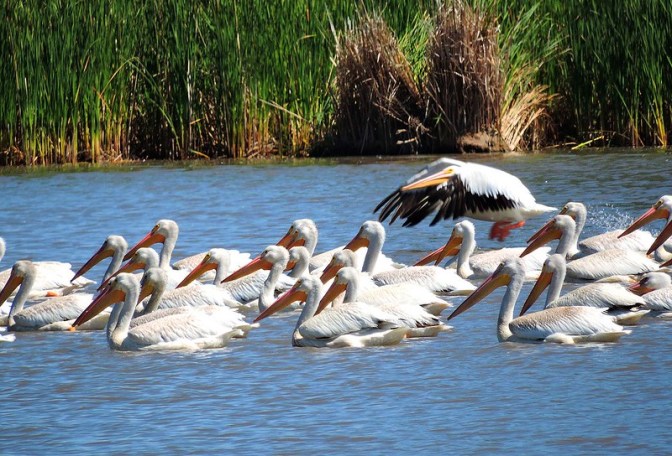
Others travel medium distances down from Canada to southern US or Mexico. Look for the American White Pelicans in Atlanta and Purtis Creek State Parks. Then there are the long range travelers, most notably the Ruby-throated hummingbird of which we are so familiar. These little beasts fly over or around the Gulf of Mexico for hundreds of miles.
What about those resident birds that hang around your feeder year round. They do not have the urge to migrate. So, how do they tolerate winter in Texas? Some molt their summer plumage to grow a fluffier feather coat that adds an insulating layer. This usually happens between late July and early September. Who has never seen a “bald-headed” Cardinal at the feeder? Others, like chickadees, drop into a state of daily torpor. The body temperature drops and the metabolism slows to conserve energy during those frigid nights.
Habitat plays a role, too. The Pineywoods with its preponderance of short-leaf pines offers dense foliage throughout the year providing protection from the elements. Perhaps you have run upon a roost of Eastern Wild Turkeys in Anderson or Cherokee counties huddled up in the pine tree foliage.

Regardless of the “how’s” or the “why’s” birds seem to know the way to winter survival. Whether birds migrate to the far reaches of warmth, prompt the body to adapt to the cold weather, or find that barrier against the wind, they will survive.

 Wade Village
One thought on “Stay Warm My Feathered Friends”