We all know that many bird species migrate as a winter survival strategy. However, animals and insects rely on migration as well.
Caribou (Rangifer tarandus) hold the record for the longest terrestrial migrations anywhere on Earth. Caribou can travel up to 2,700 miles per year. The Western Arctic Herd (WAH) at over 200,000 caribou roam across northwest Alaska. From their calving grounds on the North Slope along the banks of the Arctic Ocean they migrate as far south as the bay of Norton Sound.
As with most migrating animals the cold weather spurs the start of fall migration. With the first snowfall the WAH begin their trek. With the temperature 7.5*F warmer, that snowfall now comes about 3 weeks later than 50 years ago. So, the WAH lingers longer on the North Slope before heading south crossing the Kobuk River in late October/September instead of August. Wildlife scientists are studying how that may affect the herd.

However, nothing beats the migration of the eastern gray whale (Eschrichtius robustus). As the northern ice drifts southward, it pushes the gray whales to travel from 5,000 to 7,000 miles along the Pacific coast from the Bering sea to the lagoons of Mexico. From February to March these warm waters present a perfect environment for mating, calving, and nursing the young in anticipation of the swim back north.
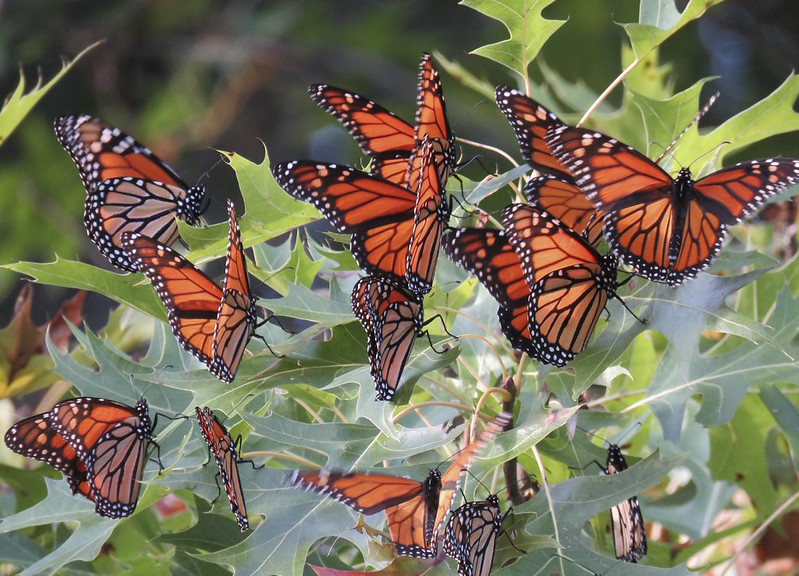
Let us not forget that insects migrate, too. And which insect comes immediately to mind… the monarch butterfly (Danaus plexippus). Spending the summertime up North the lifespan of most monarchs ranges from two to six weeks. Beginning in mid to late August as days grow shorter, temperatures fall, and food sources dwindle, most newly emerging butterflies enter reproductive diapause. Known as the super generation, they head for the warmer climes of central Mexico, a trip of up to 3,000 miles.
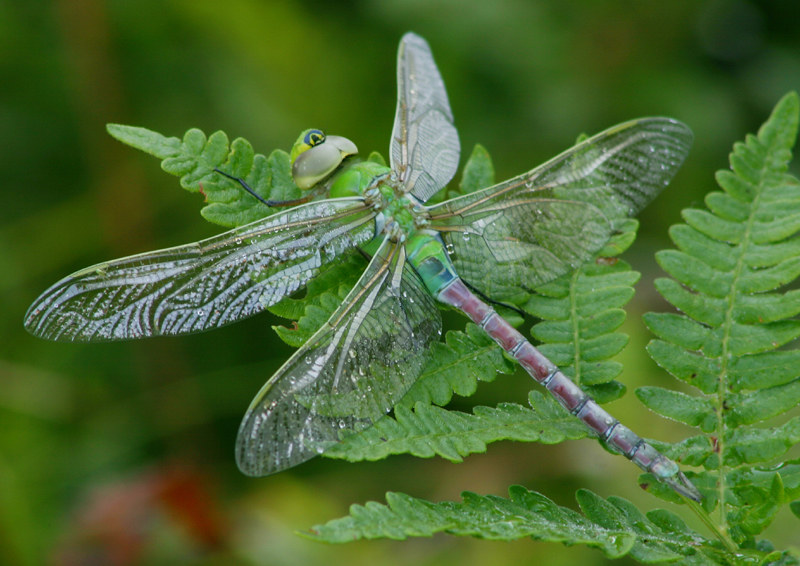
Monarchs may be the poster child of insect migration, but other insects migrate, too. About 18 species of dragonflies migrate, including the Common Green Darner (Anax junius). Although research is on-going, dragonflies travel up to 80 miles a day for a distance of over 550 miles. Many of these come from the Northern US and Canada down to Texas.
Of course, many species migrate during the winter and return to their summer habitats come spring, usually with babies. Each one brings their own migration story whether over a few miles or a few thousand miles.
Feature Image Credit: Caribou along a winter trail on Selawik National Wildlife Refuge / Lisa Hupp.
Resources:
Joly, K., Rasic, J., Mason, R., & Lukin, M. (2018). History, Purpose, and Status of Caribou Movements in Northwest Alaska.
Migration. (2025). Monarch Joint Venture.
Miner. A. (2014). Anax junius.

 Wade Village